Manufactured Housing: The Misunderstood Asset Class
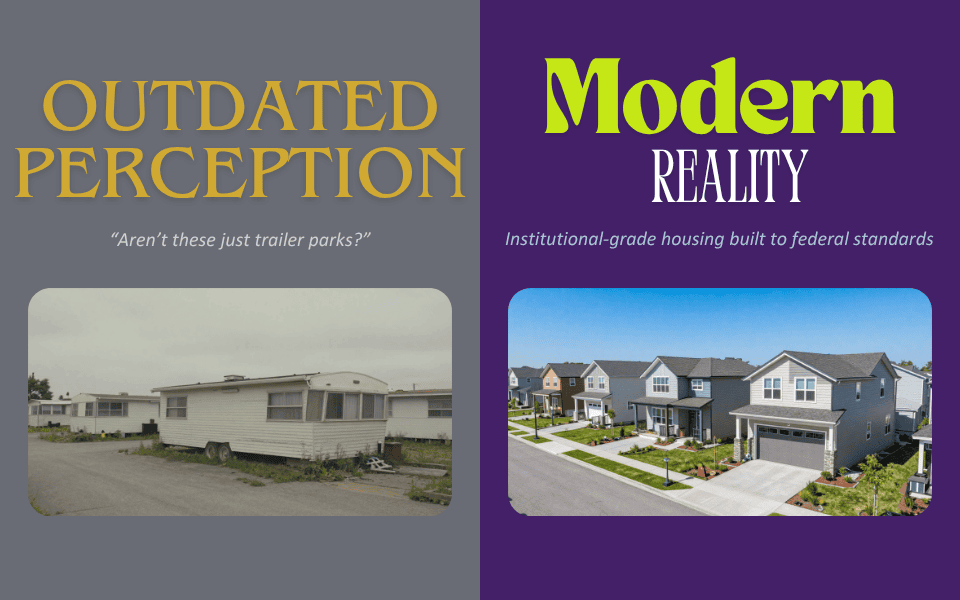
Frequently at conferences or events real estate investors will shift from polite curiosity to genuine interest about manufactured housing (MH) when we mention the numbers: strong returns, recession-resilient demand, and fragmented local and national markets ripe for maturation and consolidation. Then someone inevitably asks, “But aren’t these just trailer parks?”
That question – and the stereotypes and misconceptions behind it – is exactly why manufactured housing has been one of the most misunderstood opportunities in real estate.
A Time-Tested Solution to a Structural Problem
Walk through a newly developed or modern MH community and you’ll see homes with:
- Energy-efficient systems and appliances
- Modern floor plans and high-quality finishes
- Solid-surface countertops and kitchen islands
- Attractive exteriors, porches, and landscaping
These are not the “mobile homes” of the 1970’s. Today’s manufactured homes are built to federal HUD standards, often exceeding local codes applicable for site-built construction. And factory construction provides consistency, quality control, and efficiency – the same advantages that transformed and enables affordable automotive and technology manufacturing.
Why Intelligent Capital Is Moving In
Intelligent individual, family, and institutional investors are increasingly allocating their capital to manufactured housing because the fundamentals are compelling:
- Resilient Demand: Communities serve households earning 50-80% of Area Median Income (AMI) – a massive, underserved demographic that needs stable housing in all market cycles.
- Attractive Yields: Well-run communities can generate 8-12% cash-on-cash returns, with upside through professional management and capital improvements.
- Limited New Supply: Zoning restrictions and NIMBY opposition make new development difficult, supporting pricing power for existing assets.
- Fragmentation: Thousands of small and prior-generation operators open opportunities for roll-ups, operational improvements, and institutional-grade value creation.
Where the Real Value Is Created: Infrastructure
Most investors underestimate how critical park infrastructure is in manufactured housing. Residents typically own their homes and rent the land, meaning revenues and occupancy depend on the conditions of homesites, utilities, and amenities.
Yet many communities were originally built decades ago and have aging systems:
- Undersized electrical power infrastructure
- Failing septic or sewer systems and aging water supply piping
- Deteriorating roads and site lighting
- Limited and dated community amenities
Strategic capital replacements and upgrades can:
- Support rent growth
- Enable home site expansion
- Reduce operating expenses
- Improve regulatory compliance
- Elevate and differentiate the community
Real Projectives has assisted investors in the modernization of aging portfolios by planning and managing practical, cost-effective infrastructure solutions and capital investments while improving resident satisfaction, increasing occupancy, and supporting higher lot rents.
Reframing the Narrative
Working among the entire spectrum of housing options, we believe that manufactured housing shouldn’t be viewed as a special product category but as just one method of delivering needed housing. Alongside site-built (stick), modular, panelized, printed (additive manufacturing), and other approaches, MH offers residents and communities:
- High quality
- Factory controlled consistency
- Faster delivery
- Lower cost
- Strong alignment with affordable and attainable housing needs
We feel the question should become: Which construction method best serves the market, timeline, and other objectives?
The Due Diligence Imperative
Because of the complexities of MH parks, acquisition success in this sector requires specialized expertise for:
- Infrastructure assessments of electrical, water/sewer, and other complex systems
- Regulatory review at local and state levels
- Market positioning and demographic analysis
- Realistic capital planning and budgeting based on actual conditions
Why This Matters & How We Can Help
Affordable housing demand, institutional capital, and regulatory momentum are converging. Investors who understand the nuances – and partner with experts who know the MH sector – can generate strong returns and minimize multiple risks while addressing a critical social need.
Real Projectives leverages extensive knowledge and expertise in this sector precisely because we recognize both the opportunity and the expertise gaps. Our clients rely on us to investigate, plan and manage the nuances that general-purpose project managers or property consultants often miss or lack capacity and expertise to get important work done.
Having an experienced partner on your team can make all the difference.
If you’re evaluating manufactured housing opportunities or looking to strengthen an existing portfolio, our team can help you navigate the complexities and unlock institutional grade performance.
Contact us to get started.
